Fun Bubble Activities That Build Speech and Language Skills
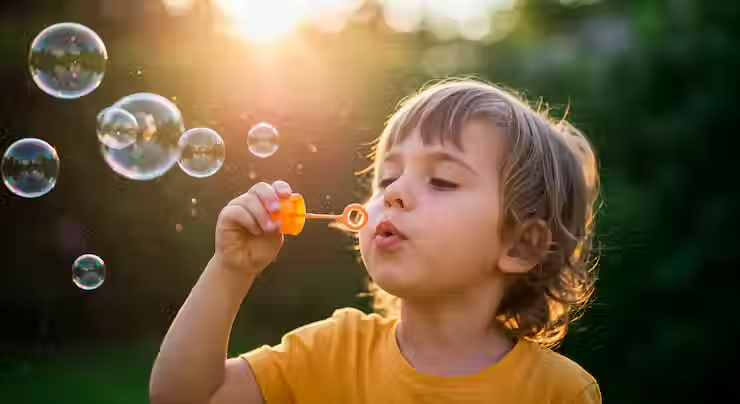
Bubbles are one of the easiest and most affordable ways to encourage speech and language development through play. Whether your child is popping bubbles in the backyard, catching giant bubbles, or taking turns with a bubble machine, bubble play naturally encourages communication, vocabulary growth, and social interaction.
The best part? Most children are instantly motivated by bubbles. That excitement creates opportunities for requesting, commenting, imitating words, following directions, and practicing early conversation skills; all while having fun outdoors.
If you’re looking for an easy summer activity that supports language development without feeling like “work,” bubbles are a great place to start!
Disclosure: As an Amazon Associate, I earn from qualifying purchases. This post may contain affiliate links, which means I may earn a small commission at no extra cost to you.

Why Bubbles Are Great for Speech and Language Development
Bubble play naturally encourages interaction between adults and children. Instead of asking children to sit and practice flashcards or drills, bubbles create meaningful opportunities to communicate during play.
Children are often motivated to:
ask for “more”
request help
comment on what they see
practice turn taking
imitate actions and words
use gestures and joint attention
Bubbles also slow down play in a helpful way. There are natural pauses between blowing, popping, and refilling bubbles, which gives children opportunities to communicate.
I love keeping a simple bubble set at home and in my speech therapy room for quick language activities all year round.

Vocabulary Words to Practice During Bubble Play
One of the easiest ways to build language skills during play is by repeatedly modeling simple vocabulary words while your child is engaged and having fun.
Here are some great bubble-themed words to practice:
Basic Vocabulary
bubble
wand
pop
blow
wet
dry
sticky
Size Words
giant
tiny
big
little
Action Words (Verbs)
pouring
dumping
blowing
floating
catching
popping
You don’t need to quiz your child or force repetition. Simply model the words naturally during play.
For example:
“Wow! Giant bubbles!”
“Pop the tiny bubble!”
“Your hands are sticky!”
“The bubbles are floating up high!”
“Catch it!”
“Pour more bubbles in.”
Repeating words during exciting activities helps children connect meaning to language in a natural way.
Language Concepts You Can Practice with Bubbles
Bubbles are surprisingly versatile when it comes to teaching early language concepts.
Opposites
Bubble play creates natural opportunities to practice:
high/low
up/down
big/little
fast/slow
Try saying:
“The bubble is going UP!”
“Now it’s DOWN!”
“That bubble went HIGH!”
“Can you pop the LOW bubble?”
Children learn concepts more easily when they can see and experience them during movement and play.
Turn Taking
Turn taking is another valuable social skill that bubbles support naturally.
You can model:
“My turn.”
“Your turn.”
“Mommy’s turn to blow.”
“Now your turn!”
This is especially helpful for toddlers, preschoolers, and children working on social communication skills.
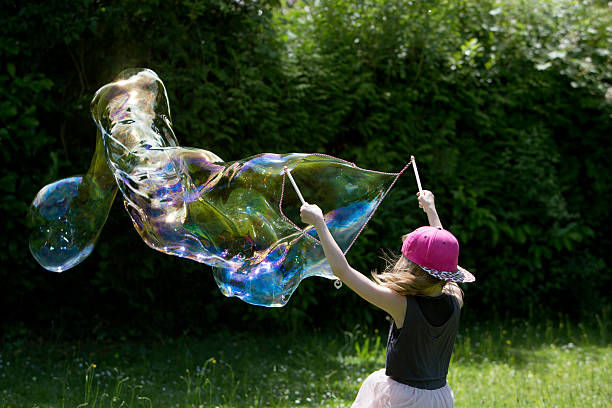
Giant bubble wands are especially fun for practicing words like big, high, floating, and up during outdoor play. These are great for your older kids too.
Best Bubble Toys for Encouraging Communication
Not all bubble toys create the same opportunities for interaction. Some toys naturally encourage more requesting, commenting, and turn taking than others.
Here are a few favorites that support speech and language development.
Bubble machines and bubble guns are highly motivating for many children because they create a constant stream of bubbles with very little effort.

This creates opportunities for:
requesting “more”
asking for help
commenting
joint attention
excitement and shared interaction
Try pausing the machine occasionally and waiting expectantly before turning it back on. This encourages children to communicate in order to continue the activity.
You can model phrases like:
“More bubbles!”
“Turn it on!”
“Again!”
“So many bubbles!”

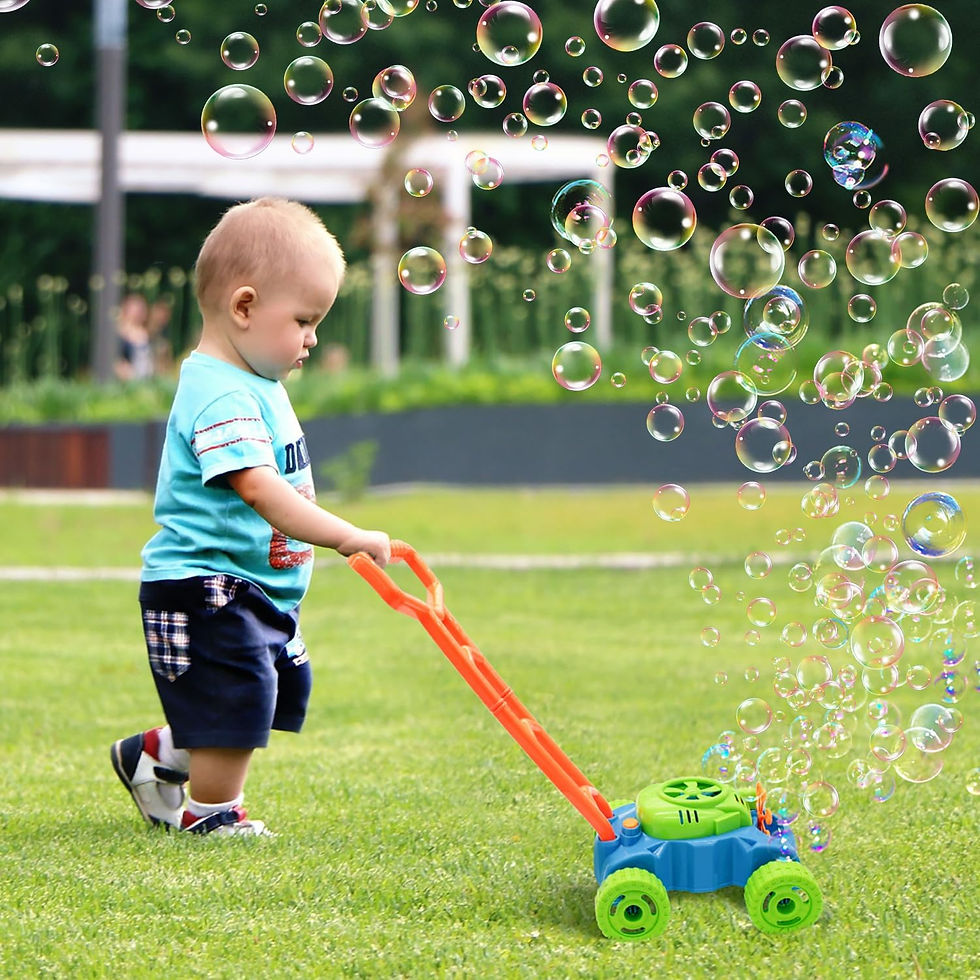
Bubble Lawn Mowers and Push Toys
There are even bubble toys that combine movement and pretend play.
Children naturally practice action words like:
push
go
stop
blow
run
Pretend play also encourages imagination and conversational interaction.
You can model:
“Ready, set, GO!”
“Push the mower!”
“The bubbles are behind you!”
“Stop!”
These toys work especially well for active children who enjoy movement-based play.
Let’s be honest, many bubble activities end with spilled bubble solution everywhere. Spill-proof bubble containers can make bubble play less stressful for parents (and SLPs!) while still giving children opportunities to practice language skills independently.
They’re especially helpful for:
toddlers
outdoor play
siblings sharing bubbles
reducing frustration
This also creates opportunities to practice words like:
wet
dry
empty
full
pour
dump

Simple Ways to Encourage More Language During Bubble Play
You do not need special training or complicated activities to encourage language development during play.
A few simple strategies can make a big difference.
Instead of immediately blowing bubbles, pause and wait expectantly.
This encourages children to:
request
point
use gestures
imitate words
initiate joint attention
Even a simple sound or gesture counts as communication.
Model Short Phrases
Keep language simple and repetitive.
Try phrases like:
“Big bubble!”
“Pop pop pop!”
“More bubbles!”
“Go up!”
“Catch it!”
Children learn through repeated exposure during meaningful activities.
Follow Your Child’s Lead
If your child wants to stomp bubbles instead of blow them, that’s okay.
Follow their interests and model language related to what they are already enjoying.
This keeps communication fun and pressure-free.
Repeat Important Words Often
Repetition helps children connect words to meaning.
You might repeat:
“bubble”
“pop”
“blow”
“up”
“more”
many times during a single play session.
That repetition is powerful!
Easy Bubble Activities to Try This Summer
Need simple ideas? Here are a few easy bubble activities that encourage communication naturally.
Bubble Catching Game
Try catching bubbles with hands, cups, or toy nets while practicing words like:
catch
pop
mine
got it
Giant Bubble Chase
Use giant bubble wands outside and encourage children to:
run
jump
reach
pop
Bubble Pouring Station
Set up cups and containers for pouring bubble solution while modeling:
full
empty
pour
dump
Turn-Taking Bubble Time
Practice social skills by taking turns blowing bubbles and waiting.
Final Thoughts
Bubble play doesn’t need to be complicated to support speech and language growth. A simple bottle of bubbles can create opportunities for vocabulary development, social interaction, turn taking, following directions, and early conversation skills.
Whether you use a bubble machine, giant bubble wand, or a basic bottle from the dollar store, bubbles are one of the easiest ways to make language learning feel playful and natural.
And best of all, kids usually think they’re just having fun!